Two questions keep coming up with the teams I work with, and they are really one question. Am I falling behind. Will there still be a job for me. They mean AI, and they are not wrong to ask.
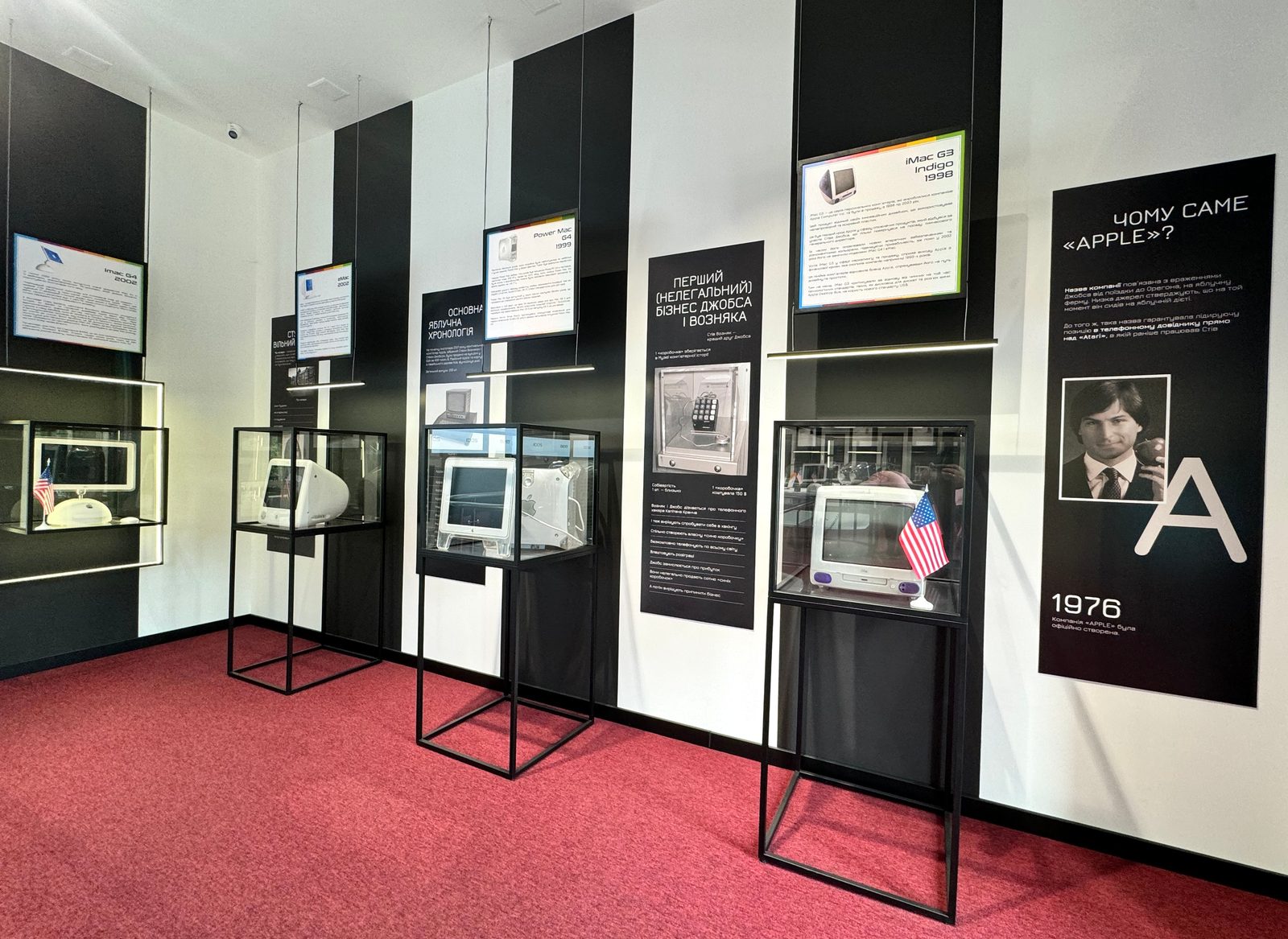
I did not have a clean answer, which bothered me more than I let on. Then I had a free Saturday in Lviv, and I spent it in a museum full of old computers.
It is a good one. Rooms of machines you forget existed, lit and labelled, the frightening new things of one decade sitting quiet behind glass for the next one to walk past without a second look.
The machines in those rooms were not the one my mother used. Hers was a PC running MS-DOS, German accounting software, an amber screen, the more expensive kind, not the cheaper green one. These were Apples. A different maker, different everything under the lid. But from the outside they were the same animal, the boxy case, the one glowing monitor, the whole face of the first wave, and that was enough to put me back in her office, a boy watching her work.
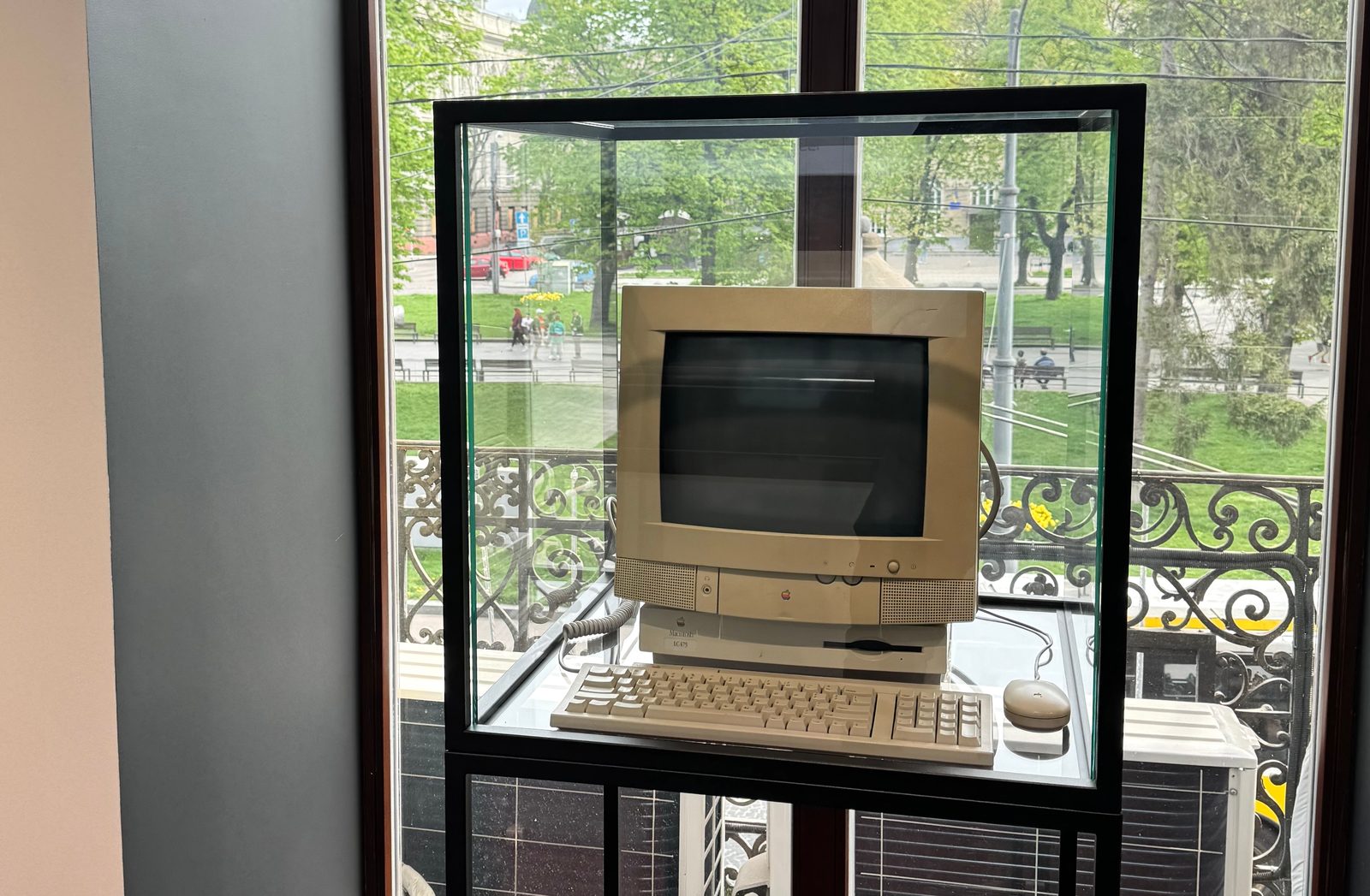
My mother was an accountant. When her machine arrived it was a serious thing, heavy, boxed, installed by someone who came to do only that. And the talk around it was the talk that is around every one of these machines. One of these can do the work of ten people.
But that was talk. Nobody was going to hire ten people. The real question was smaller and more honest. The workload was growing, and the company wanted to know whether the computer could let her carry that growth without adding anyone, and leave room for more. So it was never about replacing her. It was about what one person could now hold.
The part the machine did not mention
What the machine did not mention was the price, and the price was hers.
She had to learn the accounting software. She had to learn MS-DOS, which assumed you already knew things nobody had taught her. She had to pull apart processes she had run by hand for years and rebuild them around a machine that did some steps brilliantly and others not at all.
That is work. Real, frustrating, slow-at-first work, done on top of the job she already had. The machine could carry more only because she carried the cost of learning to drive it. She knew that, and she paid it, and years later she said so plainly. The computer was a good decision. It was also a long stretch of being slower and worse before she was faster and better.
That is the thing I took from it, long before I could put it in a sentence. The machine decided nothing. She did. It sat there offering more in exchange for the work of changing, and she took the deal.
Everyone at one of these moments takes a side. Keep it the way it was, or change. Both are a choice, including the first one, though it rarely feels like one.
The shape of every machine
I looked back up at the glass.
When I started out, the developers I knew were all at big firms. The machines were expensive, and only companies that could afford them built much software. Then the machines got cheap and small and started replacing typewriters, in every office, not one, and the work came with them. A company that had a single computer for accounting soon had ten, then thirty, and someone had to make each of them do the specific thing that company needed.
So developers left the big firms for the small ones, because suddenly the work was everywhere. It did not shrink. It moved, and it multiplied, down to the company that now has one person keeping the machines running and another building things in the evenings next to a day job. The car did the same thing a generation earlier, taking the work from the people around the horse and handing it to mechanics and parts sellers and dealers who had not existed before.
None of that proves the next person lands well. It proves something smaller and more reliable. The work changes and moves, it rarely just vanishes, and whoever wants to stay in it pays to move with it.
The same room, a different decade
So when they ask me those two questions, I am standing in the same room, with the same machine on the table, a different decade.
I have stopped giving the easy answer, because the easy answer is a lie by omission. "People always adapt" is true about people in general and useless to the person in front of you. My mother adapted. It still cost her a year.
And yes, someone always says this time is different, and this time they have a case. The machine is reaching for the judgement now, not the hands. I do not wave that away. But the part that is not different is the deal. It was never the ledger getting automated that decided my mother's future. It was whether she paid to move with it. The technology was good. The gap between having it and understanding it was the problem, and it still is.
Where I will not comfort anyone is the price. My mother had years. The machine came one office at a time, and she had a career's length to become the person who ran it. This wave is faster, and the speed is the cruel part, because the price is time and time is exactly what is being taken away. And the room to pay it, the slack to be slow and bad for a while, the years still ahead of you, is not handed out evenly. "Just change" is easy to say from a desk that is already paid for.
So if I am the person being asked, I owe more than the instruction. I owe the time, protecting the months it takes to learn the thing instead of demanding full speed through the change. And I owe the honesty of saying which parts of someone's work are actually exposed, rather than reassuring them about all of it.
Back past the glass
I walked back out past the glass, past a hundred machines that were each once going to end somebody's living and now only teach history. The museum has since closed, I read later, which felt about right. Even the place that kept the old machines did not get to stay.
My own office was in the bag on my shoulder, a machine my mother would not recognise, the latest version of the same deal. That is a story for another day.
I cannot promise anyone that changing makes it better. Nobody can. I can only promise that standing still guarantees it will not. That is the one thing, after all these machines, I am sure of.