On most mornings in Bangkok, my workday starts with a choice that doesn’t look like work. I put on a black linen shirt, blue jeans, and black sneakers. I slip on my Oura ring and my Apple Watch Ultra, pick up a black backpack that holds my entire office, and walk down to where my black Honda Forza is waiting.
The moment I pull into traffic, the day narrows to something simple. I cannot answer emails. I cannot respond to messages. I cannot check graphs or dashboards. I ride. That is all.
By the time I filter through the last line of cars and park near a café, my head is clearer than it was when I woke up.
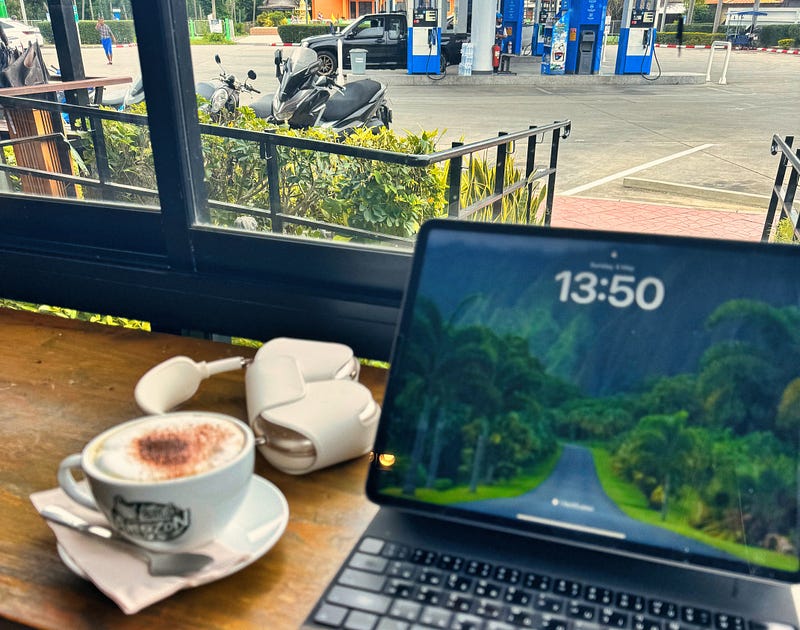
Inside, I look for a particular kind of spot. A corner seat. A comfortable bench or sofa. A place away from the entrance and far from the ordering area. I prefer darker corners with soft light to bright, open space. I like to hear the room but not sit in its center.
In local coffee shops, my order is almost always the same. A hot flat white or latte, with a dark roast if they have it. When I end up in a Starbucks, which still happens, I usually skip the coffee and go for a hot matcha green tea latte. Their coffee taste is not my favorite, and I do not drink things just because they fit the picture of “a working coffee.”
I put my backpack on the bench and pull out my small setup. An iPad with a keyboard. Headphones. Sometimes a battery powered espresso maker that works with ground coffee or Nespresso capsules for later in the day. Everything I need to run teams and build products lives in this one bag.
I am Dirk. A German technologist who moved to Thailand in 2005 and never really left. For more than two decades I have been building and guiding software systems and the people around them. I started in a world of mainframes and Unix. I worked on enterprise tools, early e-commerce and web systems. I helped start companies. I worked on IoT and SaaS platforms. I took on leadership roles in fintech and other software products.
The path was messy. The way I work now is not.
From European road trips to motorbikes in Bangkok
My interest in movement started long before I knew what a CTO was.
As a child and teenager in Germany, I spent summers in a car with my parents, driving across Europe. Long stretches of highway taught me two simple things. Systems matter. Patience matters. You can plan all you want. In the end, you fuel the car, check where you are going, and accept that the road and the day will have their own ideas.
I spent years touring Europe on a motorcycle. It felt like freedom. You can go almost anywhere, but only with what you can carry. Packing for those trips was my first real lesson in practical minimalism. Every extra item had a cost in balance, in how quickly you could move, and in how tired you felt at the end of the day. You feel each poor decision in your shoulders.
Today I ride a Honda Forza 300. It takes me through Bangkok traffic and, when I need space, out of the city.
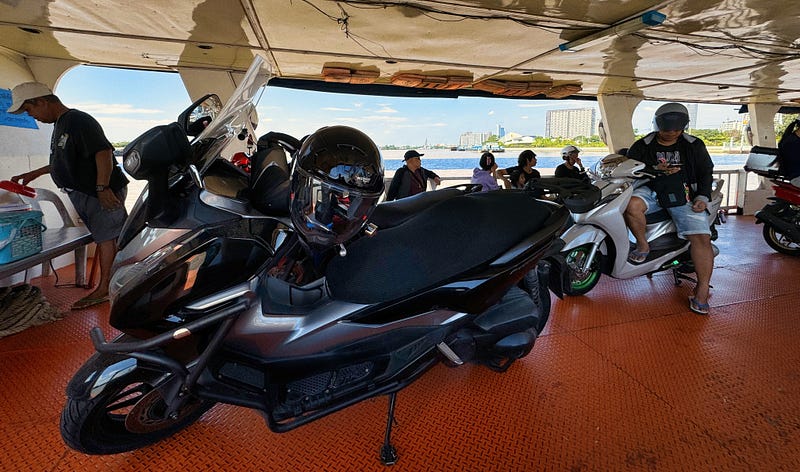
One of my favorite short escapes is to Bang Kachao, often called the “green lung” of Bangkok. It is an island inside a loop of the river. To get there, I ride to a small ferry, roll the bike on board, and cross the water. As the concrete banks disappear behind me and trees appear ahead, the city drops away. The roads become narrow. The air is different. You remember that Bangkok is not only concrete.
When I travel down the eastern seaboard to places like Bang Saen or Si Racha, I enjoy riding over the Chonlamakwithi Bridge. The sea opens on both sides. You feel very small and very free at the same time. There is a coffee shop near the bridge with a view of the water. Sometimes I stop there, pull out my iPad, and work for a few hours with the ocean in front of me.
In my backpack or the bike compartment I always keep a few small things that never appear in productivity posts. A tire puncture repair kit. A battery powered air pump with a flashlight. Some emergency cash. In remote areas, credit cards are just plastic. Cash is the thing that gets you moving again. On a motorbike, you learn to respect the one percent cases, not just the photos that look good online.
All of this has a simple pattern. Movement feels like freedom, but that is only true if your systems and your load allow it.
The same is true for software teams.
Replacing mainframes and learning to see systems
My working life began in a very different environment to the one I am in now.
In my early career I worked as a system analyst and software developer in a company that still used a mainframe. My job was to help build Unix client server systems that would one day replace it. The conversations were not about microservices or clusters. They were about whether the new architecture could handle the real work and whether we understood the flows of information enough to avoid breaking something important.
I did not have polished language for this at the time, but I was learning to look at work as a whole. Simple questions guided me. Who is actually using this. What happens if we change this one part. Where does work get stuck. What kind of failure are we quietly accepting when we take this shortcut.
Those questions stayed with me. They just moved into new contexts.
I worked in enterprise environments, on systems for telemarketing and telesales. I moved into early e-commerce and content management, when web shops and web apps were not standard yet. Later I co-founded startups in Australia and Thailand, and went through the full ride of building, shipping, growing, and eventually exiting.
Over time I stepped into roles that asked me to connect technology with product, design, marketing, and the wider business. I helped work on smart home and IoT platforms for condos and shopping malls. I got involved in fintech. In 2019 I helped create a blockchain review brand. We looked at the code behind some hyped projects and asked a simple question. Is there anything solid here, or only a story?
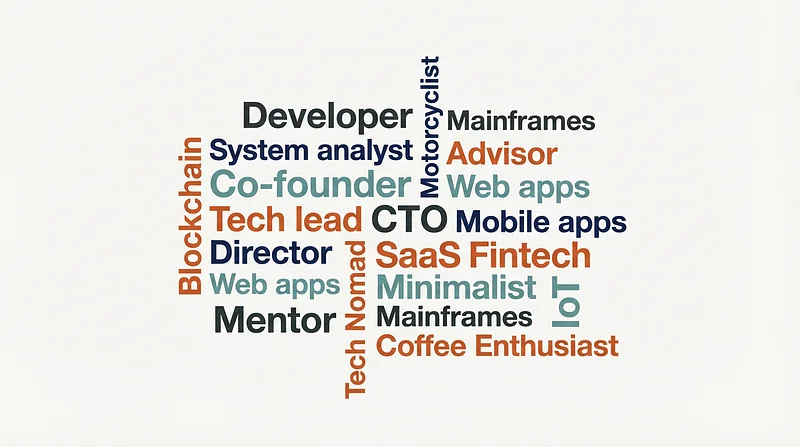
The job titles changed. Developer. System analyst. Co-founder. Tech lead. Director. CTO. Advisor.
The surface of the work changed. Mainframes. Web apps. Mobile apps. SaaS. Fintech. IoT. Blockchain.
What did not change was this. You need to understand how everything connects, and you need to care about what people at the edges are actually going through.
That is still the center of my work.
The 4K monitor that changed my setup
For a long time, my desk looked like a picture of “serious productivity.”
I had three full HD monitors side by side. It felt powerful. Email on one screen, code or documents in the middle, chats and other windows off to the side. At a glance, it looked like a control center. It was easy to feel important sitting in front of it.
At some point a conversation started about upgrading to a 4K monitor. We talked about pixel counts. Eight million pixels on a single large 4K display. About two million on each of my three monitors. On paper, one good screen could replace three smaller ones.
The numbers were interesting, but that was not what stayed with me. The real question that formed in my head was simple. Why did I want so many visible windows in the first place?
Did I really need constant access to that much information at once? Or was I just using it to feel busy and in control?
That moment stuck. It was a small crack in the idea that “more setup means more productivity.”
After that, I started to remove things. First I went from three monitors to one. Then I began to use my iPad more seriously for focused work. Over time, the image of being surrounded by screens stopped feeling strong and started to feel like static.
Now most of my meaningful work happens on a single screen. Often it is the iPad for meetings and light work. For deeper thinking, writing, and planning, I use a focused environment that does not invite constant switching.
That change, from “more screens” to “enough screen,” changed how I look at tools in general. If I have to think about which screen something is on, my attention is already split.
When you reduce your setup, you are not only changing hardware. You are changing how your mind moves through the day.
Building products and teams in the real world
Over the years, I have worked in several areas.
SaaS products that need to make sense to both engineers and non-technical people. Fintech systems where mistakes are not just bugs, but trust issues. IoT platforms where hardware, firmware, cloud, and mobile apps have to work together and still feel simple to the person using them. Parts of systems that use blockchain quietly in the background, where the ledger is useful but does not have to be the hero of the story.
I have worked with small teams and larger ones, with local groups and remote ones spread across time zones. I have seen teams with every tool you can imagine, yet no clear understanding of who does what. I have seen diagrams that looked beautiful in slides but fell apart on first contact with real customers.
Through all of this, I keep coming back to a few simple anchors. Start with people. Users. Customers. Team members. Founders. Be honest about constraints. Money. Time. Skills. Rules. Reality. Pick the simplest system that can do the work and still grow with you for a while. Protect attention. Your own, and the attention of the people who trust you to lead them.
This way of working is not about being clever. It is mostly about being honest and removing what you do not need. It feels very similar to packing for a motorbike trip or choosing what lives on your desk.
Everything you add has a cost, even if that cost is quiet at first.
The quiet feedback loop that changed my mind
I am introverted by nature. For a long time I took more energy from solving hard problems than from talking about them. Mentorship was not something I talked about much. I just tried to be useful to the people around me.
Over the last decade, some younger engineers I worked with stayed for many years. Some of them joined as juniors. Today they are strong, independent professionals with their own teams and responsibilities.
I watched their work and their lives change over that time. They made better decisions. They designed clearer systems. They negotiated better for themselves. They created kinder and more effective environments for the people they now lead.
There was no single dramatic moment. Just a long, quiet line of progress.
At some point I realized something that took me by surprise. The way I think about systems, about people, and about work was not just “how I do things.” It was useful to others. It had already shaped careers and, in small ways, the lives around those careers.
That gave me confidence to share more openly. Not as someone who has all the answers, but as someone who has seen a lot of patterns repeat and wants to save others some pain.
These notes are one way I can do that.
What you can expect here
In these essays, you will see two threads that keep meeting.
The first is how I live and work. Riding a motorbike through Bangkok or across Thailand. Working from coffee shops and coworking spaces. Taking week-long trips where I bring my full “office” in a single backpack. Brewing espresso on a balcony or beside a road with a small battery-powered machine and local beans. Making real choices about how much I carry and what I say no to.
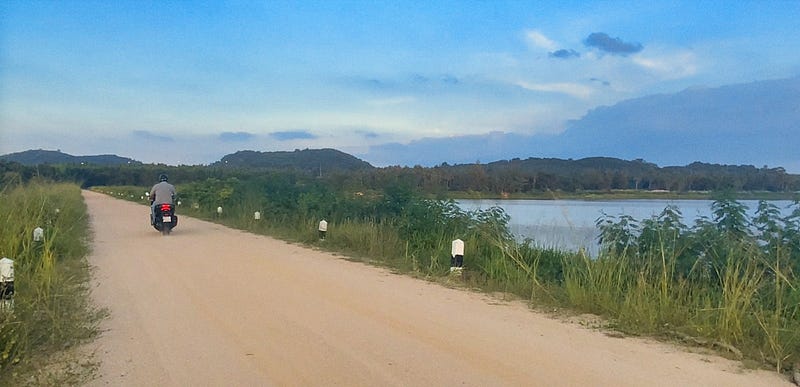
The second is what I have learned about building products and teams. How to think beyond your own task list. How to move from individual contributor thinking to something closer to a CTO mindset. How to design teams and structures that can move and turn when needed instead of collapsing under their own weight. How to make decisions in SaaS, fintech, and IoT that respect both the user and the people doing the work. How to use tools like blockchain quietly in the background when they help, and ignore them when they do not.
You will not find code tutorials here. There are many good places for that already.
What you will find is ways of thinking that help you grow into larger responsibility. Simple patterns for team structure, leadership, and communication. Stories from the road and from real systems, not from idealized whiteboards. A focus on clarity, on people, and on keeping your work and your life as simple as they can reasonably be.
Some notes will be open to everyone. Some will go into more detailed frameworks, templates, and processes that you can use directly with your own teams.
I will share more in the next notes about the quieter side of CTO work. How I think about structure and ownership in teams, how I decide what to build next, and how I try to protect attention when everything pulls in the opposite direction.
If you would like to see how building tech and leading teams actually plays out from the seat of a motorbike or if you are an engineer, a tech lead, a founder, or simply someone who likes the idea of doing serious work from a small, portable setup, I would be happy to have you along.
I will write from coffee shops in Bangkok, from coworking spaces, from small towns, and from wherever the road and the work take me.
For now, I will finish this flat white, pack my backpack, put on my helmet, and ride home.
Tomorrow will start the same way. A motorbike. A backpack. And a clear sense of what matters.